 Asclepio
Homeostasis: el cuerpo en equilibrio in 3D
Homeostasis is the body's ability to keep its internal environment stable (temperature, amount of water, blood sugar, blood acidity and many other…
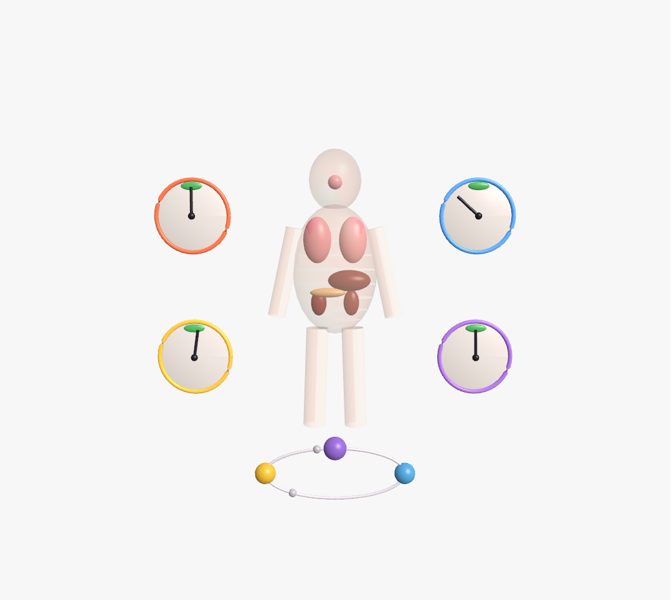
Explained for every age
For kids (7–11)
Outside it can be hot or cold, you can eat a lot or nothing at all, run or sleep... and still your body keeps its inside almost the same. That is called homeostasis: your body is like a team that checks all the time that your temperature, water and sugar are just right.
For teens (12–16)
Homeostasis is the body's ability to keep its internal environment stable (temperature, amount of water, blood sugar, blood acidity and many other variables) even when the surroundings change. Stable does not mean fixed: the values go up and down a little, but they stay within a healthy range. It is achieved by the nervous system and the endocrine system together with organs such as the kidneys, lungs, liver and pancreas, almost always through negative feedback.
Pre-Med (17+)
Homeostasis is the maintenance of a relatively constant internal environment in the face of external and internal disturbances. Claude Bernard described the regulation of the internal environment in the 19th century, and Walter Cannon coined the term in 1926. Each regulated variable has receptors that detect the deviation, a control center that compares it with a set point and effectors that correct it, generally through negative feedback. The autonomic nervous system, the hypothalamic neuroendocrine axis and effector organs such as the kidney, lung, liver and pancreas are involved. The regulated value is not rigid: core temperature, for example, oscillates with the circadian rhythm, and in fever the hypothalamic set point itself shifts.
What you can explore
Negative feedbackThermoregulationWater balanceBlood sugar regulationAcid–base homeostasis
Missions
- Guardians of balance Explorer
- Feedback loops Discoverer
- Homeostatic control systems Pre-Med