 Asclepio
Química de la digestión in 3D
Digestion has a mechanical part (chewing, mixing) and a chemical part: stomach acid, bile and enzymes break the large molecules in food into smaller ones.…
Explained for every age
For kids (7–11)
Chewing breaks food into little bits, but that is not enough: your body uses special juices that break it down into tiny pieces. That way sugars, proteins and fats can pass into your blood and give you energy to play and grow.
For teens (12–16)
Digestion has a mechanical part (chewing, mixing) and a chemical part: stomach acid, bile and enzymes break the large molecules in food into smaller ones. Starch ends up as glucose, proteins as amino acids and fats as fatty acids and monoglycerides. Those small pieces are absorbed in the small intestine.
Pre-Med (17+)
Chemical digestion hydrolyzes macromolecules that cannot cross the epithelium: polysaccharides, proteins and triglycerides. The players are salivary and pancreatic amylase, gastric HCl and pepsin, bile (an emulsifier, not an enzyme), pancreatic enzymes (proteases, lipase, amylase) and brush border enzymes, which complete the digestion of disaccharides and peptides. Monosaccharides and amino acids enter the capillaries of the villi; lipids are reassembled into chylomicrons and leave through the lacteals (lymph). Pancreatic bicarbonate neutralizes the acidic chyme in the duodenum.
What you can explore
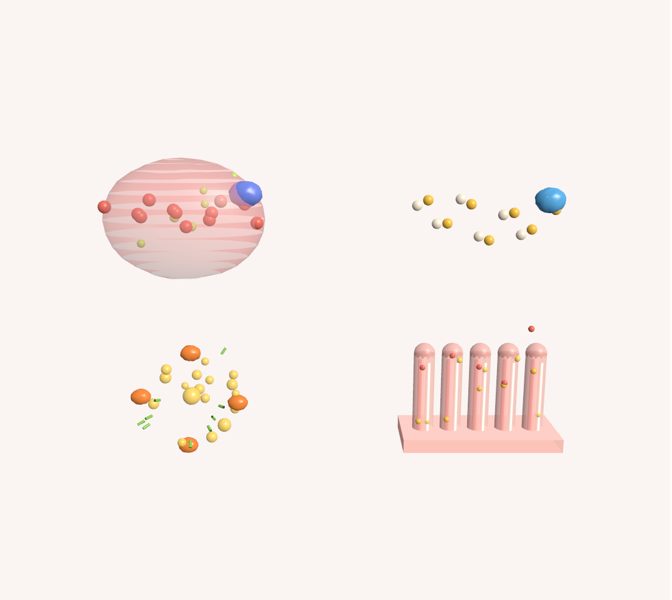
Gastric acidPepsinStarch digestionBilePancreatic lipaseIntestinal villi and absorption
Missions
- The tummy lab Explorer
- Chemical scissors Discoverer
- Biochemistry of digestion Pre-Med