 Asclepio
History of the cell and science in Chile in 3D
The idea of the cell changed as new evidence appeared. In 1665 Robert Hooke saw tiny compartments in cork and called them "cells". In the 1670s Antonie…
Explained for every age
For kids (7–11)
A long time ago nobody knew we are made of cells, because they are so small that you can't see them with the naked eye. Thanks to better and better lenses, very curious people discovered them little by little. Today scientists all over the world, including in Chile, keep studying how they work.
For teens (12–16)
The idea of the cell changed as new evidence appeared. In 1665 Robert Hooke saw tiny compartments in cork and called them "cells". In the 1670s Antonie van Leeuwenhoek observed single-celled living things with microscopes he built himself. In the 19th century Schleiden and Schwann proposed that plants and animals are made of cells, and Virchow spread the idea that every cell comes from another cell. In the 20th century the electron microscope made it possible to see the inside of cells in enormous detail.
Pre-Med (17+)
Cell theory was built through accumulating evidence and technical improvements: compound and simple light microscopy (17th century), the postulates of Schleiden (1838, plants) and Schwann (1839, animals and plants), and the principle that every cell arises from a pre-existing cell, proposed by Remak and popularized by Virchow (1855). It is a good example of how biology depends on physics (optics, electrons), chemistry (fixation, stains, fluorophores) and mathematics (image reconstruction). The scene also includes biomedical research in Chile, with the school of membrane biophysics started by Mario Luxoro.
What you can explore
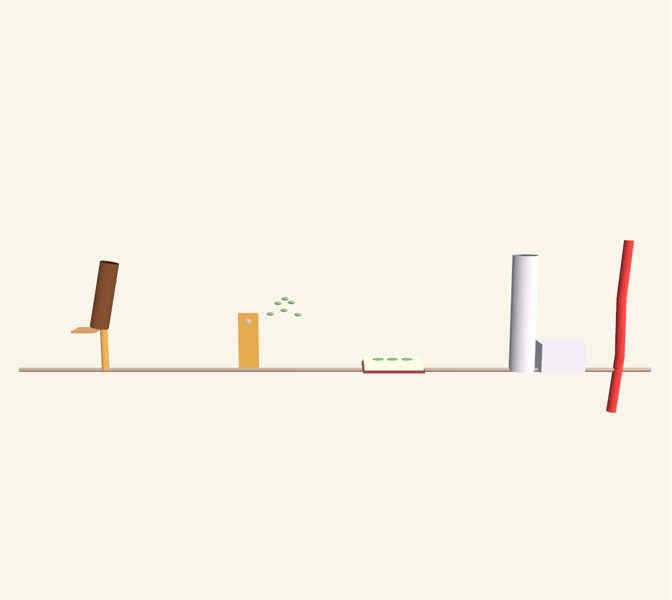
Robert Hooke and corkLeeuwenhoek's microscopeCell theoryModern microscopesBiological research in Chile
Missions
- Detectives of the tiny Explorer
- How the model of the cell changed Discoverer
- From the lens to the ion channel Pre-Med