 rganauta
Bacteria and antibiotics in 3D
An antibiotic is a medicine that kills bacteria or stops them from growing and multiplying. It works because it attacks parts that bacteria have and our…
Explained for every age
For kids (7–11)
Antibiotics are medicines that help your body beat some of the bacteria that cause infections. But they don't work against viruses, like the ones that cause colds. That's why they are only used when a doctor says they are needed.
For teens (12–16)
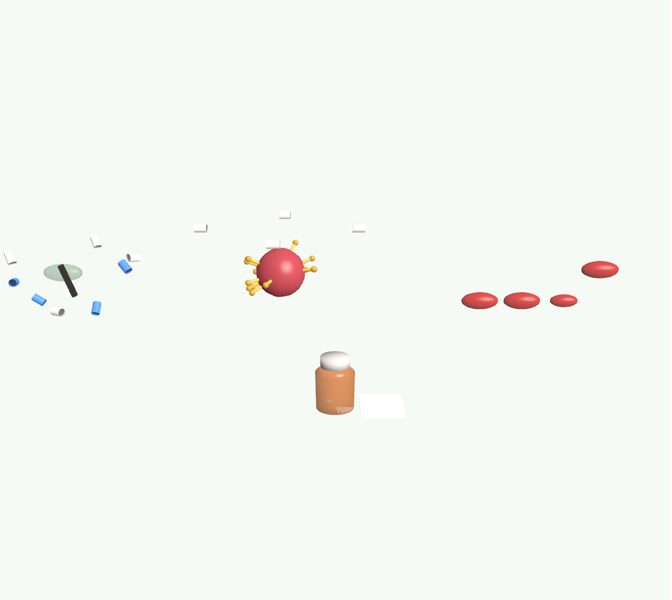
An antibiotic is a medicine that kills bacteria or stops them from growing and multiplying. It works because it attacks parts that bacteria have and our cells don't, such as the cell wall. Viruses don't have those parts, so antibiotics do nothing to them. In the scene you will see an antibiotic breaking a bacterium's wall, a virus that is not affected and a population of bacteria where a resistant one survives and multiplies. Using them well is key to keeping them working.
Pre-Med (17+)
Antibiotics are antimicrobials active against bacteria; some are bactericidal and others bacteriostatic. Their clinical usefulness rests on selective toxicity: they act on targets that are unique to bacteria or very different from human ones (peptidoglycan synthesis, the 70S ribosome, enzymes such as DNA gyrase or bacterial RNA polymerase, the folate pathway). They have no effect on viruses or fungi. Their use, whether necessary or not, exerts selective pressure that favors resistant strains; antimicrobial resistance is now considered one of the major public health problems, and its main driver is excessive or inappropriate use.
What you can explore
Antibiotic target in bacteriaHow antibiotics actNo effect on virusesResistance by natural selectionResponsible antibiotic use
Missions
- Antibiotic guardians Explorer
- Resistance detectives Discoverer
- Target, spectrum and selective pressure Pre-Med