 Asclepio
Skin (histology) in 3D
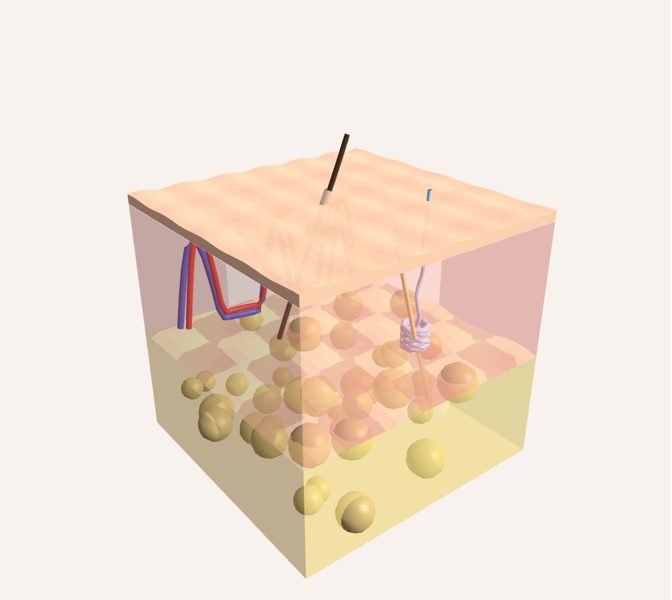
Three layers: epidermis (epithelium that renews completely in about 6 or 7 weeks; no blood vessels), dermis (connective tissue with vessels, nerves, hair…
Explained for every age
For kids (7–11)
Skin is the biggest organ you have: about 2 square meters. This block is a tiny 3-millimeter piece seen through a magnifying glass. It has three layers: the outer one that renews itself, the middle one with hairs and glands, and the bottom one with fat that keeps you warm.
For teens (12–16)
Three layers: epidermis (epithelium that renews completely in about 6 or 7 weeks; no blood vessels), dermis (connective tissue with vessels, nerves, hair follicles, sebaceous and sweat glands) and hypodermis (fat that insulates and cushions). It protects, regulates temperature, senses and makes vitamin D.
Pre-Med (17+)
Epidermis: keratinized stratified squamous epithelium (stratum basale, spinosum, granulosum, lucidum in palms and soles, corneum); keratinocytes, melanocytes, Langerhans cells and Merkel cells. Dermis: papillary (capillary loops, Meissner) and reticular (type I collagen, follicles, eccrine and apocrine glands, Pacini). Hypodermis: adipocytes. Thermoregulation by vasodilation and sweating; vitamin D3 synthesis via UVB.
What you can explore
EpidermisDermisHypodermisHair follicleSebaceous glandArrector pili muscleSweat glandCutaneous blood vesselsMeissner corpusclePacinian corpuscleSun protectionTouch (somatosensory system)
Missions
- Three layers of skin Explorer
- The skin's appendages Discoverer
- Histology and skin clinical practice Pre-Med