 Asclepio
Vida de un glóbulo rojo in 3D
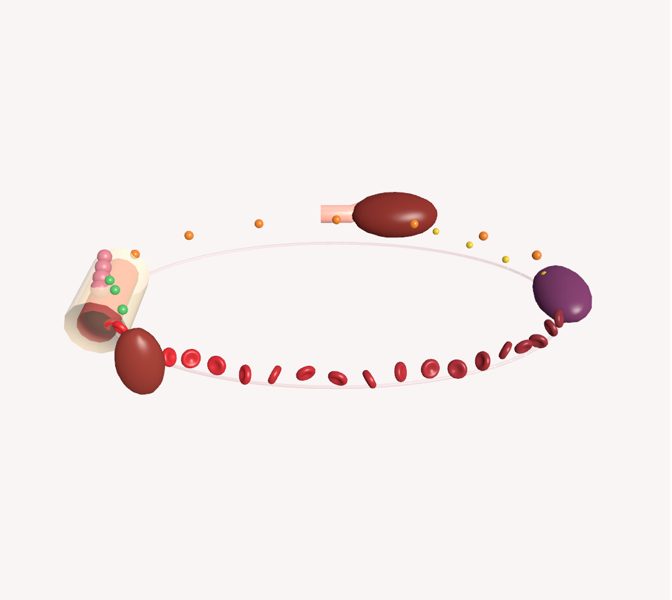
Every red blood cell follows a cycle. It is made in the red bone marrow, circulates for about 100 to 120 days delivering oxygen and, as it ages, it is…
Explained for every age
For kids (7–11)
Red blood cells don't last forever. They are born inside your bones, travel through your blood for about four months carrying oxygen and, when they get old, your body takes them apart and reuses their pieces. It's a giant recycling job!
For teens (12–16)
Every red blood cell follows a cycle. It is made in the red bone marrow, circulates for about 100 to 120 days delivering oxygen and, as it ages, it is removed by cells called macrophages, mostly in the spleen. The iron is recycled to make new red blood cells, and the rest of the heme group is turned into bilirubin, which leaves the body in bile. The kidneys keep watch on oxygen and, with the hormone erythropoietin, adjust how many red blood cells are made.
Pre-Med (17+)
Erythrocyte cycle: erythropoiesis in the red bone marrow (≈ 7 days from committed progenitors), stimulated by renal erythropoietin in response to hypoxia; a functional lifespan of ≈ 100–120 days; and removal of senescent erythrocytes by macrophages of the mononuclear phagocyte system (spleen, liver and lymph nodes), which normally occurs at the same rate as production. Heme is broken down into iron, biliverdin and carbon monoxide; iron returns to the marrow bound to transferrin or is stored as ferritin, and bilirubin is conjugated in the liver and excreted in bile. An adult produces about 2.4 million erythrocytes per second.
What you can explore
Bone marrow erythropoiesisKidney and erythropoietin (EPO)Mature red blood cellSpleen: removal of old red blood cellsIron recyclingBilirubin pathway
Missions
- The great red recycling Explorer
- The complete erythrocyte cycle Discoverer
- From heme to jaundice Pre-Med