 Asclepio
Messenger molecules in 3D
Cells communicate using small molecules. Hormones travel through the blood to faraway organs, like adrenaline or melatonin. Neurotransmitters pass from…
Explained for every age
For kids (7–11)
Your body sends messages using tiny molecules. Some travel in the blood, others jump from one neuron to another. And there's one, glucose, that's like fuel for your cells!
For teens (12–16)
Cells communicate using small molecules. Hormones travel through the blood to faraway organs, like adrenaline or melatonin. Neurotransmitters pass from one neuron to the next at the synapse, like dopamine or serotonin. Each message only works on cells that have the right receptor, like a key in its lock. Glucose isn't a message, but the main fuel for cells.
Pre-Med (17+)
Chemical signaling: endocrine (hormones through the blood), synaptic (neurotransmitters) and paracrine. Several molecules play both roles: adrenaline is a hormone of the adrenal medulla and a neurotransmitter for some neurons. Catecholamines (dopamine, noradrenaline, adrenaline) derive from tyrosine; indolamines (serotonin, melatonin) from tryptophan. Specificity depends on receptors, mainly G protein-coupled receptors and ligand-gated ion channels. Glucose is an energy substrate whose blood concentration is regulated by hormones such as insulin and glucagon.
What you can explore
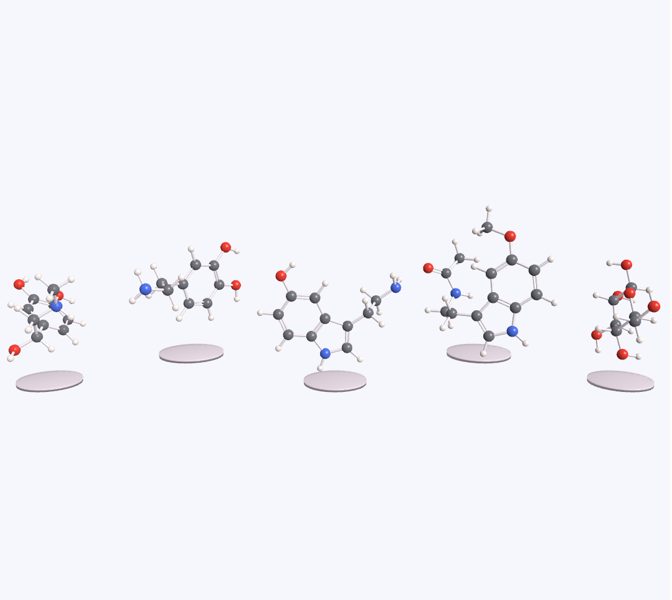
Adrenaline (epinephrine)DopamineSerotoninMelatoninGlucose
Missions
- Tiny messages Explorer
- Hormones, neurotransmitters and fuel Discoverer
- Biosynthesis and receptors Pre-Med