 rganauta
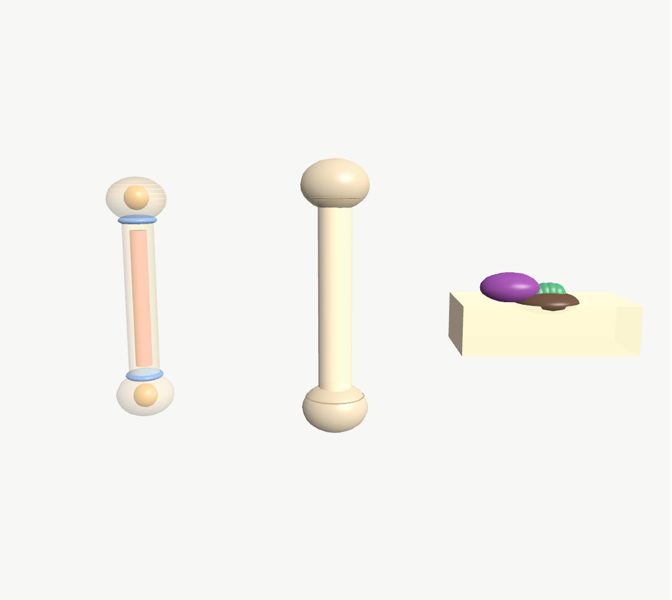
Bone growth in 3D
Long bones grow in length thanks to growth plates, two discs of cartilage near their ends: the cartilage multiplies and is gradually replaced by bone. At…
Explained for every age
For kids (7–11)
Your bones grow along with you! Near the ends of long bones, like your thigh bone, there is a band of cartilage where new bone is made, and that is how the bone gets longer. Also, some builder cells and some cleaner cells renew your bones your whole life.
For teens (12–16)
Long bones grow in length thanks to growth plates, two discs of cartilage near their ends: the cartilage multiplies and is gradually replaced by bone. At the end of puberty the plates close and height stops increasing. Even so, bone is still alive: osteoclasts remove old bone and osteoblasts make new bone throughout life.
Pre-Med (17+)
Most bones, including long bones, form by endochondral ossification: a hyaline cartilage template is replaced by bone starting from a primary center (diaphysis) and secondary centers (epiphyses). Between them the epiphyseal plate (physis) persists, responsible for longitudinal growth until it closes at skeletal maturity, leaving the epiphyseal line. In parallel, bone remodeling couples osteoclastic resorption and osteoblastic formation throughout life, regulated by PTH, vitamin D, calcitonin, growth hormone, sex steroids and mechanical loading.
What you can explore
Growth plate (epiphyseal plate)Ossification centerClosed growth plate (epiphyseal line)OsteoblastOsteoclastBone remodeling
Missions
- My bones are growing! Explorer
- Growth plates Discoverer
- Physis and remodeling Pre-Med