 Asclepio
Sistema nervioso autónomo in 3D
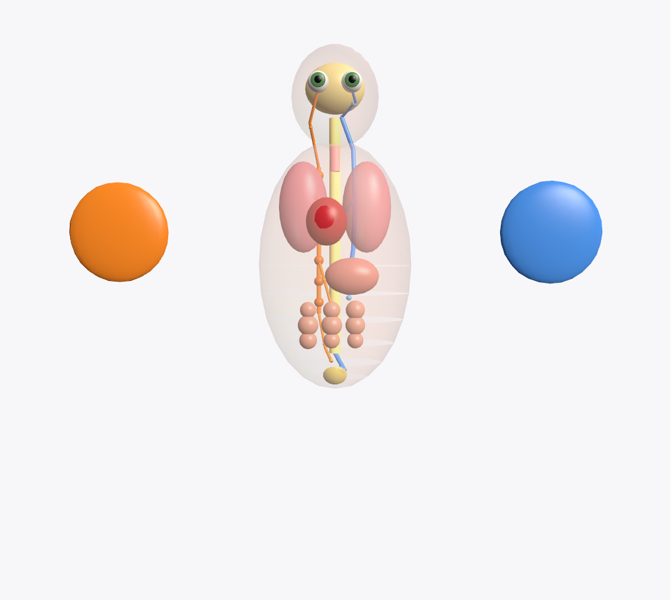
The autonomic nervous system controls involuntary functions: the heartbeat, digestion, breathing rate, pupil size, urination and sweating. It has two main…
Explained for every age
For kids (7–11)
It is the part of your nervous system that works on its own, without you having to think. While you play or sleep, it makes your heart beat, moves your food through your tummy and makes you sweat when it is hot.
For teens (12–16)
The autonomic nervous system controls involuntary functions: the heartbeat, digestion, breathing rate, pupil size, urination and sweating. It has two main branches that usually work in opposite directions: the sympathetic, which gets the body ready to "fight or flee", and the parasympathetic, which supports "rest and digest". They are like a car's gas pedal and brake, and together they keep the body's internal balance (homeostasis).
Pre-Med (17+)
Division of the nervous system that innervates viscera, smooth muscle, cardiac muscle and glands, and acts largely unconsciously. It is classically divided into sympathetic (thoracolumbar outflow), parasympathetic (craniosacral outflow) and enteric (myenteric and submucosal plexuses of the gut wall). The sympathetic and parasympathetic efferent pathways use two neurons: a preganglionic neuron with its cell body in the CNS and a postganglionic neuron in an autonomic ganglion; acetylcholine is the preganglionic transmitter in both. The hypothalamus integrates autonomic function, with input from the limbic system, and the brainstem organizes reflexes such as cardiac and respiratory control. Both divisions modulate the organs continuously and in a complementary way, not only in emergencies: for example, sympathetic tone keeps blood pressure from dropping when you stand up.
What you can explore
Sympathetic nervous systemParasympathetic nervous systemPupilHeart: heart rateLungs and bronchiStomach and intestineUrinary bladder
Missions
- From scared to calm Explorer
- Gas pedal and brake Discoverer
- Autonomic pathways and transmitters Pre-Med