 Asclepio
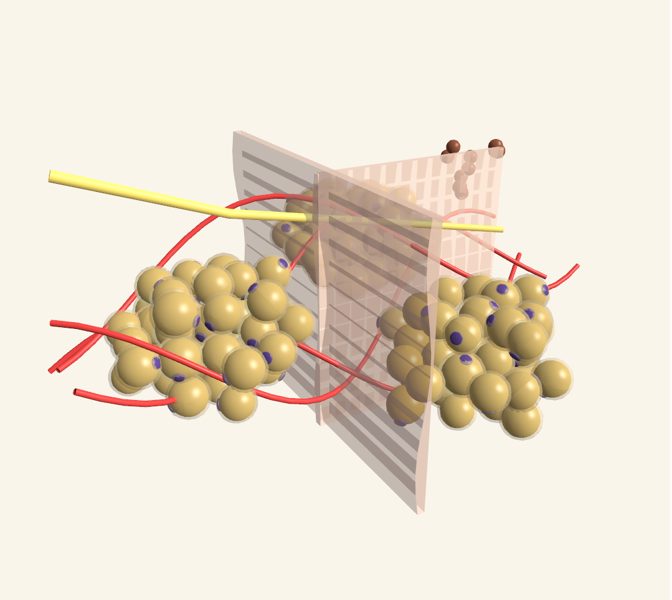
Fat (adipose tissue) in 3D
Connective tissue made of adipocytes: cells with a single droplet of fat that fills almost everything and pushes the nucleus to the edge. Where: under the…
Explained for every age
For kids (7–11)
Fat isn't something bad: it's the body's pantry. It is made of round cells filled with oil, under the skin and around the belly organs. It keeps you warm, cushions bumps and stores energy for when you're not eating.
For teens (12–16)
Connective tissue made of adipocytes: cells with a single droplet of fat that fills almost everything and pushes the nucleus to the edge. Where: under the skin (subcutaneous), around the organs (visceral), in the bone marrow and as padding in the palms, soles and eye sockets. Why: energy reserve (1 g of fat = 9 kcal), thermal insulation, cushioning and a factory for hormones like leptin, which tells the brain how much reserve there is. Brown fat, plentiful in babies, burns fat to produce heat.
Pre-Med (17+)
Unilocular (white) adipocytes with a single lipid droplet and peripheral nucleus; triglycerides synthesized from fatty acids and glucose (insulin stimulates lipogenesis; glucagon, epinephrine and cortisol stimulate lipolysis via hormone-sensitive lipase). Endocrine organ: leptin (satiety, hypothalamus), adiponectin (insulin sensitivity), resistin, estrogens via aromatase. Depots: subcutaneous (metabolically safer) and visceral (insulin resistance, cardiovascular risk). Multilocular brown fat with UCP-1 in mitochondria: non-shivering thermogenesis. Lobules separated by collagen septa with vessels and sympathetic nerves.
What you can explore
White adipocyteConnective tissue septaAdipose capillaries and nervesBrown adipose tissue
Missions
- The body's pantry Explorer
- More than a storehouse Discoverer
- Endocrine organ and metabolic syndrome Pre-Med